excl VAT
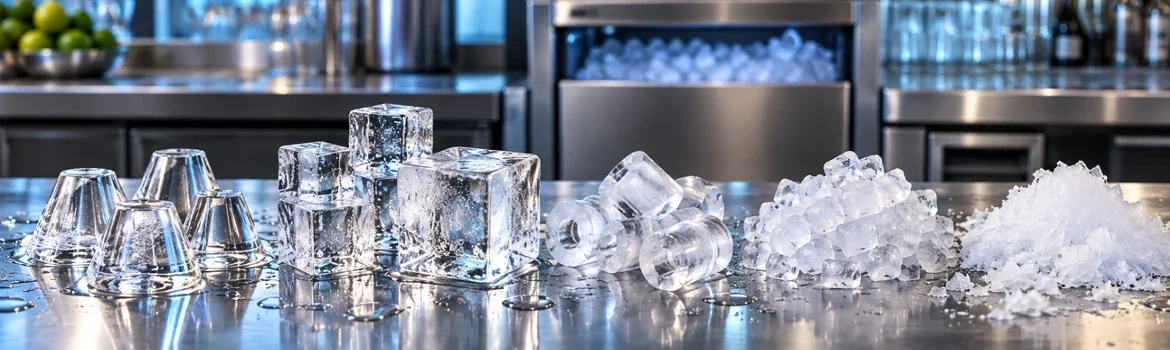
An ice maker is more than a machine that produces a certain number of kilograms per day. Ice shape, piece size, density and moisture content affect how quickly a drink cools, how much it is diluted, how it looks when served and how effectively food is chilled.
Some businesses need clear, slow-melting cubes. Others need small pieces for cocktails, wet granular ice for fish displays, ice for medical procedures or high-capacity flake ice for production processes.
Spanish manufacturer ITV Ice Makers offers solutions for all these requirements.
ITV has designed and manufactured ice makers in Spain since 1981. According to the manufacturer's presentation, its 19,000 m² factory in Valencia produces approximately 30,000 machines a year. More than 600,000 ITV ice makers have been installed worldwide, with products supplied to over 100 countries.
ITV specialises in ice-making technology, from small undercounter machines to industrial systems capable of producing several tonnes of ice per day.
The most useful way to divide the ITV range is by the intended use of the ice, rather than cabinet size.
| Ice type | ITV ranges | Main applications |
|---|---|---|
| Solid 22–40 g cubes | GALA, STELLA, DELTA MAX, ORION, PULSAR, KITCHEN ICE | Bars, cafés, restaurants and cocktails |
| Large 48–90 g cubes | SUPER STAR, SUPER STAR PLUS, NG 2CUBE | Clubs and distinctive drink presentation |
| Small 6–12 g cubes (SPIKA) and 20 g hollow ice (QUASAR) | SPIKA, QUASAR | Fast food, soft drinks and high-volume service |
| Small-piece, granular and Nugget ice | ICE QUEEN IQ, IQN, IQF | Cocktails, retail, food and technical cooling |
| Flake ice | SCALA | Fish displays, food processing and high-volume cooling |
| Granular ice with an additional hygiene system | MEDIKAL IQ | Hospitals, clinics, rehabilitation centres and laboratories |
A separate group comprises ice storage bins, dispensing systems and dispensers for storing and distributing ice after production.
These are solid, regularly shaped, clear ice cubes for drinks where appearance matters as much as temperature.
A 22 g cube is a versatile choice for cocktails, tonic, soft drinks and iced coffee. Compared with small pieces, a solid piece has less surface area for the same mass of ice, so it generally melts more slowly.
How do the ranges differ?
Practical tip. When preparing large quantities of iced coffee, first consider the temperature of the coffee and milk. Pouring a very warm drink over ice melts some of it before serving. A chilled drink base helps maintain a more consistent flavour and reduces unnecessary dilution.
These ranges produce larger solid cubes for cocktails, mixed spirits, long drinks and restaurant service.
Although the individual cubes have a similar mass, their shape, production technology and machine construction differ.
DELTA MAX: a 40 g Gourmet cube. This is a larger piece with a truncated-cone outline. The range uses the ITV A3S spray system with flexible nozzles designed to help limit limescale build-up. DELTA MAX NG35 suits bars seeking a larger solid piece of ice.
ORION: a classic solid cube. ORION 35 produces 40 g ice, while the smaller ORION 25 produces 14 g mini cubes. This distinction matters: not all ORION models make the same ice size.
PULSAR: 40 g cubes produced using a different technology. PULSAR 25 uses ITV's Turbo system, which differs from conventional water spraying. Assess this range by its construction and operating characteristics, rather than cube weight alone.
Practical tip. If a bar uses 40 g ice, standardise the number of cubes used in each glass. Consistent recipes help maintain similar drink temperature, flavour and cost, regardless of who prepares the order.
Larger pieces are used for a striking visual effect or to control drink cooling with a large, solid piece of ice.
ITV offers three distinctive formats:
The 90 g NG 2CUBE is especially interesting for cocktail bars serving spirits in wide, low glasses. One large square cube creates a neat, minimalist presentation.
However, larger ice does not mean a drink will remain completely undiluted. Melting depends on ice and liquid temperature, total ice mass, surface area and stirring.
Practical tip. Before choosing a 48, 60 or 90 g format, check the internal diameter of your glasses. A large piece that does not fit the preferred glass becomes an everyday inconvenience.
QUASAR produces cylindrical ice with an internal cavity. It differs from a solid cube by having a larger contact surface.
Hollow Finger ice suits everyday soft drinks, water, juices and other drinks where rapid heat transfer is important.
QUASAR uses a mechanical paddle system. The manufacturer highlights reliable operation in more demanding water and ambient conditions.
For example, QUASAR 20C makes 20 g Finger ice, with a nominal output of 22 kg per day and a 6 kg bin.
Important: hollow ice is not simply a cheaper alternative to solid cubes. It is a different cooling and presentation format. Its larger surface can cool a drink faster, but also changes its melting rate.
The SPIKA range is aimed at fast-food restaurants, snack bars, filling stations, cafés and other venues preparing many drinks in a short time.
The range offers two main formats:
Smaller ice distributes easily in a cup, provides more contact surface and cools drinks quickly. This is convenient for lemonades, carbonated drinks and high-volume beverage preparation.
Important: Full Dice and Half Dice are separate factory versions of the machine. They are not two operating modes that staff can switch between with a button.
Practical tip. Set a standard ice portion by weight, rather than cup fill height. Switching from 12 g Full Dice to 6 g Half Dice does not necessarily give the same ice mass in a cup that looks equally full.
For large kitchens and drink preparation lines, ITV also offers modular SPIKA MS machines with separately selected storage bins.
This is an important ITV range because not all ICE QUEEN IQ models make the same ice.
Diamond: small pieces for cocktails. ICE QUEEN IQ 50C makes small, irregular pieces for cocktails prepared with crushed ice, such as Mojito, Caipirinha and certain tropical drinks.
There is no need to crush larger cubes separately. This ice fills a glass well and creates the texture associated with these cocktails.
Wet granular ice: for retail and product cooling. Other IQ models, such as IQ 180, produce wetter granular ice.
This ice is convenient for fish and seafood displays, fruit and vegetable transport, and food production. The small pieces distribute well around products.
Practical tip. Diamond and wet granular ice should not be treated as the same product. In a cocktail, the water introduced with the ice matters as much as piece size. In retail displays, ice moisture can help maintain moisture at the product surface.
Nugget ice consists of small, compressed pieces with a distinctive, easier-to-chew texture.
It is popular in soft drinks, cocktails, fruit drinks and self-service beverage stations.
Unlike a large solid cube, Nugget ice fills more of the gaps in a glass, creates a different drinking experience and makes good contact with the liquid.
ICE QUEEN IQN 240 nominally produces 240 kg of Nugget ice per day and has an integrated 55 kg bin.
Practical tip. Nugget ice can become a distinctive feature of a drink. If a café replaces conventional cubes with it, review the recipes because ice surface area, moisture and dilution will change.
The IQF range produces small, irregular Chip ice pieces. This format differs from solid cubes and thin SCALA flakes.
Chip ice is convenient for covering product surfaces, filling gaps and providing effective contact cooling.
It is used in fish, seafood and other food displays, buffets and certain technical processes.
ITV also identifies IQF applications in hospitals, laboratories, spas and wellness centres. The ice has approximately 20% residual moisture.
ICE QUEEN IQF 300 is a modular machine with a base output of 382 kg per day. It requires a separately selected compatible ice bin.
Practical tip. When choosing an ice maker for fish retail, assess product type, contact between ice and product, display area and meltwater drainage, as well as the required kilograms.
SCALA produces thin, dry flake ice. Depending on the model and settings, flake thickness can be adjusted within approximately 1.5–3 mm.
This ice is used for:
ITV also presents SCALA as a solution for healthcare facilities and hospitals with large ice requirements.
SCALA 400 C nominally produces 400 kg of flake ice per day. Larger SCALA models can produce several tonnes per day.
The SCALA range includes self-contained, remote-condensing and Split versions. The latter may require a separately designed refrigeration system.
Practical tip for fish retail. Dry, very cold flake ice is particularly useful for large display bases. However, assess direct contact with delicate fish separately: surface temperature and flake shape matter. Wet granular ice may be more suitable for some displays.
Plan a sufficient ice reserve before the shop opens. High daily output alone does not guarantee that all the ice required in the morning will be ready on time.
Medical uses of ice extend beyond cooling injuries. Ice is needed in clinical procedures, laboratory testing, pharmaceuticals and the transport of biological materials.
ITV treats healthcare as a separate application area. The manufacturer mainly highlights fine granular ice, which distributes easily around the object being cooled and provides good thermal contact.
Cold treatments are used to reduce pain and swelling and in certain rehabilitation and sports medicine protocols.
Granular ice is convenient because of its shape: in a dedicated bag or compress, it conforms to a knee, ankle, shoulder or other body area more easily than large cubes.
This is relevant to:
ITV recommends the ICE QUEEN IQ granular ice range for these applications.
Practical tip. For medical cold treatments, ice must be used according to the established treatment protocol. Prolonged direct contact can damage skin, so use suitable compresses, a protective layer and controlled treatment times.
Laboratories often use ice baths to temporarily cool tubes containing biological samples, reagents or temperature-sensitive materials.
Granular ice fills gaps between tubes better than large cubes, allowing many small vessels to be cooled effectively at once.
Applications include preparations for protein, enzyme and nucleic acid testing where the specific laboratory method requires low temperatures.
Practical tip. Small ice baths do not require industrial-output machines. A sufficient supply of clean ice at the start of work, suitable vessels and procedures for controlling sample temperature are more important.
ITV identifies granular ice applications in pharmaceutical and chemistry laboratories, where it helps:
An ice bath is a simple way to remove heat quickly, but does not replace a precision temperature-control system.
Important: storing and transporting medicines or vaccines requires temperature conditions approved for the specific preparation. An ordinary ice maker does not replace validated medical refrigeration and temperature-recording equipment.
ITV's blog separately discusses the role of ice in preserving and transporting organs intended for transplantation.
Cooling can help slow biological processes and reduce the risk of tissue damage during transport. However, sterility, temperature and specialised preservation media are particularly important.
In medical transport systems, ice may be used externally to cool preservation media or sealed packaging where the specific protocol allows this.
Important: ordinary machine-produced ice must not directly contact an organ intended for transplantation. Specialised transport systems and approved procedures are used for this process.
Read more: ITV — Transplanting Organs.
ITV developed the MEDIKAL IQ line for hospitals, clinics, rehabilitation centres, physiotherapy practices and sports medicine facilities.
These machines produce fine granular ice with approximately 20% residual moisture. The main difference from standard ICE QUEEN models is the additional hygiene and operating features.
PureZone system. MEDIKAL IQ uses ozone and ultraviolet technology designed to reduce the risk of microbial growth inside the machine. Treated air circulates through designated internal areas.
Door protection. Opening the storage bin automatically switches off the disinfection system to prevent direct user exposure to UV radiation and ozone.
Integrated equipment. The manufacturer provides a water filter, drain pump, front ventilation, LED control and a cleaning mode.
Construction. An AISI 304 stainless steel cabinet, easily removable service panels and a design suited to regular maintenance.
ITV documentation lists two models:
Both are aimed at facilities where controlled equipment hygiene matters as much as ice quantity.
The manufacturer's MEDIKAL IQ technical documentation provides exact specifications and equipment details.
Important: PureZone is not certification that the ice is sterile. A specialised hygiene system does not reduce the requirements for drinking-water quality, periodic cleaning, microbiological monitoring or assessment of suitability for a particular medical use.
| Application | Suitable ITV ranges | Key criterion |
|---|---|---|
| Small physiotherapy practice | MEDIKAL 50C IQ; ICE QUEEN IQ depending on requirements | Low output, compact size and hygiene |
| Hospital rehabilitation or trauma department | MEDIKAL 90C IQ | Ice reserve, hygiene system and ease of use |
| Laboratory ice baths | ICE QUEEN IQ, MEDIKAL IQ | Fine ice structure, water quality and sample protection |
| Large hospital or spa | ICE QUEEN IQF | Large quantities of granular ice |
| Large technical cooling processes | SCALA | High daily output and suitable ice distribution |
When choosing a machine for medical use, distinguish between ordinary technical cooling and procedures subject to special medical and hygiene requirements. Suitability for a particular clinical application must be confirmed under the facility's procedures.
Hotels, self-service breakfast areas and busy beverage stations may find dispensing more convenient than manually scooping ice.
ITV SIRION DHD 130 SLIM stores and dispenses cubes made by a compatible SPIKA MS machine.
SIRION does not make ice. Its nominal 58 kg capacity refers to ice storage, not production output. The ice maker is selected separately after checking compatibility.
This arrangement reduces the need for direct contact with ice and can make customer self-service easier.
Cocktails. Choose ice for the recipe, rather than simply the most attractive cube. A large solid cube suits one presentation, while fine Diamond ice suits another. When changing ice format, recheck drink temperature and dilution.
Iced coffee and soft drinks. Standardise ice portions and use chilled ingredients where the recipe allows. This helps reduce unnecessary melting.
Fish retail. Distribute ice to cool products effectively while allowing meltwater to drain. Unsuitable ice or standing water can reduce display quality. Ice does not replace proper control of product storage temperature.
Healthcare and laboratories. Fine ice is convenient for dedicated compresses and laboratory ice baths. Clinical procedures and sample storage must follow established temperature, hygiene and safety procedures.
One machine does not suit every requirement. A restaurant may use clear cubes for drinks and a separate fine-ice machine for cocktails. A supermarket may need a different system for fish displays. A specialised format is often more useful than trying to use one ice type for every task.
A common selection mistake is considering only the manufacturer's kg/24 h output rating.
Two parameters must be distinguished:
For example, if 150 drinks are planned for an evening, using an average of 150 g of ice each, approximately 22.5 kg of ice is needed for that period alone.
If the bin holds only 15 kg, the machine must produce the balance during service, or another reserve arrangement is needed.
An output of 30 kg/24 h does not mean that 30 kg can be taken out immediately.
Ambient and incoming-water temperatures also matter. Actual output may be below the nominal rating in a hot kitchen, especially in summer. Allow a reserve and check the manufacturer's production tables when selecting a model.
Drinking-water quality directly affects ice flavour and clarity, machine output and service life.
Hard water causes limescale. Chlorine can affect taste and smell, while particles can affect the water supply system.
Depending on water composition, treatment may include:
Select a filter based on water analysis, ice-maker output and compatibility with the specific model. Water with extremely low mineral content is not necessarily best for every machine.
Read more: ITV on water quality and ice.
Many ice makers require a gravity drain for meltwater. The connection must be at the appropriate height and have the required fall.
If the discharge point is higher, a drain pump may be required.
A pump is not standard on all models. Some ITV ranges offer it as a separate factory version. Assess drain height and pump requirements before ordering, rather than after installation.
Air-cooled machines are usually a practical choice in a well-ventilated room. They need adequate air intake and removal of warm discharge air.
Water-cooled versions may suit difficult installation conditions, but generally consume additional water for condenser cooling.
Some ITV models have front air circulation to simplify undercounter installation. Nevertheless, maintain the manufacturer's clearances and keep ventilation openings unobstructed.
Avoid installing a machine beside an oven, fryer or other strong heat source.
Before ordering, check dimensions including feet, door opening, service access, electrical supply and water connections.
For modular machines, check whether the ice bin and connecting adapter are included in the selected configuration.
An ice bin is not a freezer: it provides insulated ice storage, and meltwater must drain away.
Ice used in drinks is food. Its hygiene deserves the same attention as water and other food ingredients.
Mineral deposits accumulate in the water circuit over time, and microbial contamination may develop. These are different issues: descaling is not the same as disinfection.
Cleaning frequency depends on water quality, machine workload and ambient conditions. For some models, the manufacturer's maintenance documentation specifies shorter water-system maintenance intervals when water contains more dissolved minerals.
Air-cooled condensers also need regular inspection and cleaning. A condenser coated in grease or dust rejects heat less effectively, potentially slowing production and increasing electricity use.
Some ITV NG, MS, IQ and IQN models use removable, washable air filters. These should not be confused with water filters.
Use only manufacturer-approved products for water-circuit descaling and follow the specific model's instructions. Refrigeration work and more complex technical tasks should be entrusted to specialists.
Warning signs: longer production cycles, altered cube shape, cloudy or unpleasant-smelling ice, unusual noise or drainage problems.
Read more: ITV on energy savings and ITV on new-generation air filters.
Browse the ice-maker category or the ITV manufacturer catalogue.
Shop filters help narrow the selection by relevant technical parameters. The following order is useful:
1. Choose an ice type. For drinks: Gourmet, classic, Dice, Finger or Nugget. For crushed-ice cocktails: Diamond. For food displays: granular, Chip or flake ice.
2. Filter by daily output. Calculate the required quantity and select machines that can produce it with sufficient reserve.
3. Compare bin capacity. Make sure enough ice can be stored before peak service.
4. Check installation conditions. Use relevant filters and compare dimensions, cooling type, water supply, drainage and drain-pump requirements.
5. Assess the complete configuration. Compare the machine price together with the water filter, storage bin, adapter, accessories and maintenance costs.
The key rule: choose the right ice first, then the machine that makes it. This helps the equipment meet actual business requirements and work more effectively day to day.


You must login or register in order to make comment!