excl VAT
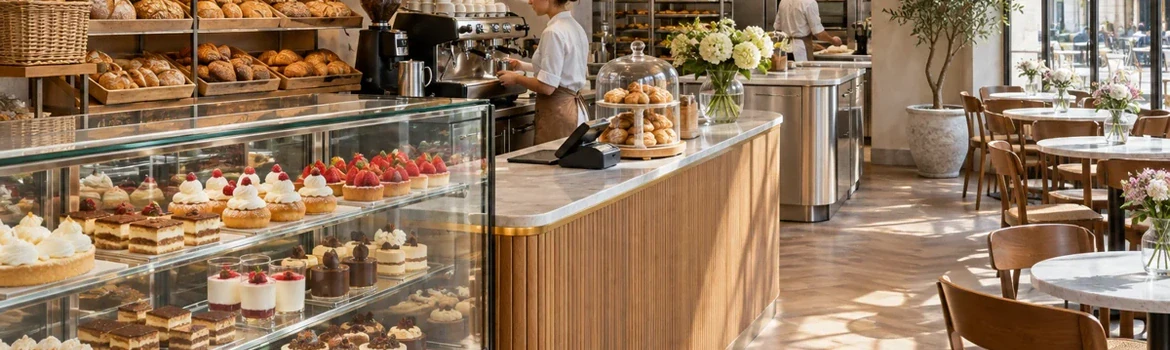
Bread, coffee and pastries in the morning, sandwiches at lunchtime, and cake or dessert in the afternoon: a bakery operating this way is more than a bread shop. Expanding the range changes production schedules, staff tasks, storage conditions, the sales-floor layout and the refrigeration equipment required.
In an INFRICO Talks discussion, Euromat group director Charles Agop and INFRICO France commercial director Antonio López examine how French bakeries have changed in recent decades. Their insights also help Lithuanian bakery-café owners plan both today's purchases and how the business will operate in several years.
Agop recalls that a traditional French neighbourhood bakery primarily sold bread and pastries. Some gradually added patisserie, chocolate, ice cream and quick snacks. Customers now visit at different times, for breakfast, lunch or coffee as well as to take bread home.
The speakers describe bakeries in southern France offering Spanish-inspired snacks, such as tortillas or cured-ham products, alongside bread. Agop sees these businesses becoming meeting places for customers with different needs. This reflects French market experience; the same range will not necessarily work equally well in every Lithuanian bakery.
Before expanding a menu, assess specific customer occasions. Do morning customers want coffee and a small breakfast? Are lunchtime customers looking for a takeaway sandwich or a hot dish? Could desserts meet afternoon demand? Each new group needs planned production, replenishment and leftover management, alongside display space.
Agop identifies a frequent planning mistake: the owner understands current demand but has not considered the desired position in five or ten years. He illustrates this with a business serving around 200 customers daily that might later aim for 500–700. This is a planning scenario, rather than a forecast.
This perspective does not mean buying equipment three times larger immediately. Plan where another cabinet could go, how ingredient storage could expand, whether electrical capacity would suffice and whether equipment could be replaced without stopping the whole business. Allow for growth in the premises plan while justifying investment against realistic workloads.
The speakers also discuss multi-site operation. Some French bakeries centralise part of their patisserie production but bake bread in the shops. This can preserve the freshly baked bread experience and reduce duplicated production tasks, but requires carefully planned transport, storage and responsibilities.
López stresses that refrigeration equipment contributes more than temperature control. As labour and energy costs rise, noise, cleaning, accessibility and staff movement matter. Even good equipment can complicate work if poor placement forces employees to walk to another room repeatedly for ingredients.
Map production, ingredient storage, snack preparation and customer service separately. Staff often benefit from a small chilled ingredient reserve beside the preparation area. For example, the glass-door INFRICO BMGN 1470 CR refrigerated counter stores chilled products beneath the worktop and makes their arrangement easier to see.
This model is designed around GN 1/1 containers. Do not assume it accepts every 600 × 400 mm bakery tray. Check container format, available depth, door opening and the actual workflow.
Bread and ambient pastries, cream desserts, prepared sandwiches and ice cream have different requirements. They may need different temperatures, display periods and service arrangements. One universal cabinet is not always appropriate.
The INFRICO VCO12 COMBO is an interesting example. Its lower section is refrigerated for self-service, while its upper section is unchilled for staff service. This can separate chilled desserts from ambient pastries within a small footprint. Products requiring refrigeration must not be stored in the upper section.
For cakes and chilled patisserie, the INFRICO VBR12PR ÁMBAR is another example. Glass shelves and lighting provide a clear dessert display. Confirm temperature suitability against recipes and storage requirements.
Ice cream and other frozen desserts need dedicated frozen-food display equipment. A positive-temperature patisserie cabinet does not replace it. Before expanding the range, list each product group with its required storage method, planned quantity and service arrangement.
López highlights energy efficiency and working convenience. He discusses variable-speed compressors, which can match cooling capacity to demand and, in some conditions, reduce electricity use and noise. The benefit depends on the specific equipment and operating conditions; the technology name alone does not guarantee savings.
Assess electricity use, cleaning, maintenance, potential downtime and staff time alongside the purchase price. If restocking a cabinet takes too long, the answer may be more convenient nearby storage rather than a larger display.
Useful improvements can start with existing equipment. Over several weeks, record morning, lunchtime and afternoon sales, end-of-day leftovers, restocking times and actual electricity use. These records help address a real problem instead of assuming new equipment will automatically improve profit.
The speakers discuss systems that record temperatures, monitor operation and report faults. Monitoring can be particularly valuable across several bakeries: a responsible person can identify a problem and arrange checks before major losses develop.
Remote alerts are not built into every refrigerator. Establish whether temperature recording operates independently, what extra controllers or communications equipment are needed and who will respond. Monitoring data helps when it forms part of an actual maintenance process.
Agop and López also emphasise flexibility. Equipment should accommodate changing menus and customer habits within its technical limits. Chilled, ambient and frozen storage requirements cannot be treated as interchangeable merely because a layout would be convenient.
Agop returns to the idea that a successful bakery is more than production and retail space. Customers value visiting, talking, discovering local products and trusting the people who make them. Technology should support quality and convenient service while preserving that personal relationship.
Plan growth around a clear direction: the customers served, the products' distinctive qualities, visiting patterns and work that could be organised more simply. Equipment then supports that direction, from a refrigerated counter to a suitable display line.
If opening or expanding a bakery-café, contact Šaldymo sprendimai for refrigeration equipment selection. Include a floor plan, current and planned range, expected customer or production workload and growth requirements for the next few years.
For dessert displays, open Refrigerated Display Cases; for chilled ingredients beneath a worktop, use Refrigerated Counters. Select Infrico as the manufacturer in either category; for displays, filter the COMBO or ÁMBAR series and refine by service arrangement and temperature range. For GN 1/1 refrigerated counters, start with the GN 1/1 700 series, then check container compatibility, dimensions and worktop construction in the product specification. Products requiring frozen storage need a suitable freezer display rather than an ordinary chilled cabinet.

You must login or register in order to make comment!